Contact

Dr. Justin Walters

Program Director

Deb Stratton

Program Administrator
Application Details

Events Calendar

Upcoming Events
17
Nov
19:00  
CST  
— Meet & Greet
University of Manitoba Physical Medicine CaRMS Meet and Greet
17
Nov
19:00  
CST  
— Information Session, Meet & Greet, Program Information, Resident Panel
University of Manitoba - Neurology - Meet the Residents
17
Nov
12:00  
CST  
— Information Session, Meet & Greet, Program Director or Assistant Program Director, Program Information, Program Q&A
University of Manitoba Diagnostic Radiology - Meet the Program Director/Associate Program Director
18
Nov
19:00  
CST  
— Information Session
Family Medicine Rural & Bilingual Programs Deep Dive
19
Nov
17:00  
CST  
— Resident Q&A
University of Manitoba, Radiation Oncology Residency - Meet the Radiation Oncology Program Residents 5:00pm CST
19
Nov
19:00  
CST  
— Information Session
Family Medicine Urban Programs Deep Dive
20
Nov
19:00  
CST  
— Information Session
Family Medicine Northern Programs Deep Dive
03
Dec
18:00  
CST  
— Information Session
University of Manitoba Anesthesiology Information Session
Upcoming Events From
University of Manitoba
17
Nov
19:00  
CST  
— Meet & Greet
University of Manitoba Physical Medicine CaRMS Meet and Greet
17
Nov
19:00  
CST  
— Information Session, Meet & Greet, Program Information, Resident Panel
University of Manitoba - Neurology - Meet the Residents
17
Nov
12:00  
CST  
— Information Session, Meet & Greet, Program Director or Assistant Program Director, Program Information, Program Q&A
University of Manitoba Diagnostic Radiology - Meet the Program Director/Associate Program Director
18
Nov
19:00  
CST  
— Information Session
Family Medicine Rural & Bilingual Programs Deep Dive
19
Nov
17:00  
CST  
— Resident Q&A
University of Manitoba, Radiation Oncology Residency - Meet the Radiation Oncology Program Residents 5:00pm CST
19
Nov
19:00  
CST  
— Information Session
Family Medicine Urban Programs Deep Dive
20
Nov
19:00  
CST  
— Information Session
Family Medicine Northern Programs Deep Dive
03
Dec
18:00  
CST  
— Information Session
University of Manitoba Anesthesiology Information Session

Program Highlights

The Section of Nephrology at the University of Manitoba consists of thirty members whose clinical interests span the gamut of nephrology, and include all areas of general consultative nephrology, hemodialysis, peritoneal dialysis, and renal transplantation. In addition, section members are actively involved in research as well as other areas of non-clinical academic activity. Examples include research in  exercise in dialysis patients, non-invasive monitoring of renal allografts, clinic pathologic correlations in acute and chronic allograft rejection, as well as proteomics and biomarkers, CKD epidemiology and risk prediction. Other academic pursuits include nephrology and undergraduate education, efficient care delivery systems and health economics, and access to renal care. Nephrology Subspecialty Residents participate regularly in these activities.

There is also an active Interventional Nephrology Program, and trainees may gain experience in tunneled line and peritoneal dialysis catheter insertion.

Trainees will also have extensive exposure to dialysis in the ICU, including managing patients on CRRT.

Read more

General Information

This residency program is for 2 years.

Program length of training does not exceed the Royal College or College of Family Physicians of Canada standard.

The University of Manitoba Nephrology Subspecialty Residency Training Program is a two year program that has been accredited by the Royal College of Physicians and Surgeons of Canada. Its purpose is to train physicians for clinical and academic nephrology practice in both university-based and community-based settings. Training takes place at three sites: Health Sciences Centre (HSC), St. Boniface General Hospital (SBGH) and Seven Oaks Hospital (SOGH).

 
Program Structure:
  1. Clinical Rotations
    The PGY4 year consists of the core nephrology rotations: the trainees will spend three months rotating through Renal Transplantation (HSC), Peritoneal Dialysis (SBGH/SOGH), Hemodialysis (all sites), and Inpatient Consultative Nephrology (HSC/SBGH). Trainees gain the necessary expertise in these areas through clinical practice, informal teaching, and self-directed study, under the supervision of the attending staff.
    Towards the end of the PGY4 year, each trainee will meet with the Program Director in order to plan their individualized PGY5 year. This may consist of a repeat of some/all of the rotations covered in PGY4, but may also include elective rotations, depending on the trainee’s progress through the CBD stages. There is a wide variety of elective rotations available, including those in interventional nephrology, nephropathology, pediatric nephrology, rural/satellite dialysis, and the nephrology inpatient ward. During PGY5, trainees are also strongly encouraged to develop their research interests, and anywhere from one to six months may be granted during the year for this purpose, depending on the scope of the project and successful completion of other elements of the training program.
  2. Outpatient Nephrology Clinic
    Over the two years, each trainee will attend their own longitudinal outpatient consultative nephrology clinic, under the supervision of a single member of the attending staff. Trainee independence increases gradually over the two years.
  3. Rounds, Journal Clubs, and other Non-Clinical Activity

There is a wide variety of structured academic rounds and teaching sessions that are part of the training program:

    • Academic Halfday
      This is a two year curriculum of topics covering all areas of general nephrology, hypertension, fluid and electrolyte disorders, hemodialysis, peritoneal dialysis, and renal transplantation. There are also sessions on ethics in nephrology and pediatric nephrology. Also built into the schedule is a research methods/study design course. These sessions consist of seminar-type discussions co-chaired by a trainee and a member of the attending staff.
    • Nephrology Section Rounds
      This occurs every Wednesday morning for 90 minutes. Here, the Nephrology Subspecialty Residents (as well as all medical students and core medical residents rotating through the service) present topics in nephrology in a semi-didactic fashion. In addition, these rounds serve as a forum for presentation of research, as well as for discussion of ethical issues in nephrology.
    • Journal Club
      Approximately 6-8 times per year, a nephrology journal club is held. This is an exercise in the critical appraisal of a recent or seminal research article in nephrology. It is conducted by the Nephrology Subspecialty Residents, followed by a discussion involving the Attending Staff.
    • Nephrology Conference Attendance
      The training program enthusiastically supports trainee attendance at national and international nephrology conferences. In particular, all trainees are provided with support to attend the Canadian Society of Nephrology or American Society of Nephrology Annual Meetings. In their PGY5 year, trainees are provided with support to attend one national of international nephrology course (which has typically been the “Renal Biopsy in Medical Diseases of the Kidneys” course at Columbia University). In addition, trainees may receive support to attend any other meeting at which they are giving a presentation.


Research/Publications

The applicants must indicate which publications are in peer reviewed versus non-peer reviewed journals/publications. If the applicant has submitted an article for publication at the time of CaRMS application, the applicant must provide evidence of journal notification of submission. The applicants must indicate all presentations at local resident research day as well as national and international conferences, and any prizes awarded.  If a presentation (oral or abstract) has been submitted to a conference, the applicant should include any letter of acceptance by conference organizers.


Curriculum Vitae (CV)

A current curriculum vitae (CV) including all relevant information required for assessment of education, leadership, administrative and research experience is mandatory.  Where applicable, please document whether activities are voluntary or reimbursed.    Your CV should be downloaded to the document section.  For research papers that have been submitted but not yet published, please include acknowledgement of submission from the journal.  See comments above under Research/Publications for information regarding how to document your work.


Other Document – Evaluation of Training – for International or US Medical Graduates Only

International or US Medical Graduates Only – you must provide a RCPSC assessment of training form from the Royal College of Physicians and Surgeons of Canada: website:  www.rcpsc.medical.org


Interviews

For the CaRMS Match which will take place in the Fall of 2021, all interviews will be conducted electronically. The applicant may meet electronically with a panel of interviewers, or with interviewers individually, or a combination of both.


Orientation for all incoming residents

Please be advised that the 2023 PGME New Resident Orientation Day is scheduled for Thursday, June 29, 2023.

This Orientation is mandatory for all incoming residents.

Read more

Salary Information

Post graduate salaries and benefits differ by province and are determined by two things: your training year, and the province you work in. See below the salaries and benefits for University of Manitoba - Adult Nephrology - Winnipeg.
Read more

Explore Location

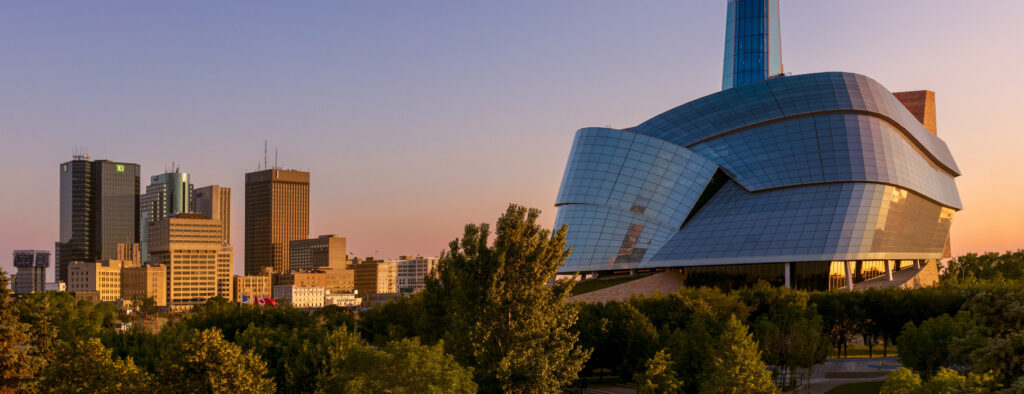
Cityscape of Winnipeg with the Canadian Museum for Human Rights in the foreground
Winnipeg
Winnipeg is the capital of the Canadian province of Manitoba. Its heart is The Forks, a historic site at the intersection of the Red and Assiniboine rivers, with warehouses converted to shops and restaurants, plus ample green space dedicated to festivals, concerts and exhibits. Nearby, the Exchange District is known for its well-preserved, early 20th-century architecture and numerous art galleries.