


Dr. Jessica Trier
Program Director
Kaitlyn Cats
Our program offers junior PM&R rotations in the Foundations of Discipline stage, and longer senior PM&R rotations in the Core of Discipline stage. Although not required by the Royal College of Physicians and Surgeons of Canada, this spiral curriculum allows graduated progression of responsibilities, as well as spaced repetition to consolidate rehabilitation knowledge.
The program includes a particular focus on Clinical EMG training that meets the six-month training requirement for EMG certification on completion of the program.
Longitudinal academic coaching is provided throughout residency training.
Funding is available to attend relevant national and international conferences.
We are a collegial group of faculty and residents. We work at Canada’s newest rehabilitation hospital, which is located on Lake Ontario.
Residents are provided the opportunity for community rehabilitation rotations outside the academic medical centre. Our goal is to train physiatrists who can pursue any type of career, from community practice to academic practice.
Residents have first on call responsibilities Monday through Thursday, with the exception to statutory holidays. Hospitalist physicians are first on call on Friday, Saturday and Sunday and on statutory holidays.
This residency program is 5 years long.
The Queen’s University Physical Medicine and Rehabilitation program is a fully accredited program, which meets the training requirements of the Royal College of Physicians and Surgeons of Canada. The program is structured with a mix of block and longitudinal components.
Please refer to the CaRMS program description page for more details about the rotations and stages of training: https://meds.queensu.ca/source/FHS%20PME%20Phys%20Med%20and%20Rehab%20Brochure%202020.pdf
The Physical Medicine and Rehabilitation Residency (PM&R) postgraduate training program is five years in length. Residents complete their first two blocks in Transition to Discipline, learning “Rehab Basics.” Foundations of Discipline (FD) is primarily off-service, but residents will have rotations in core PM&R areas as well. In Core of Discipline (CD), residents revisit these core PM&R rotations as a senior resident. Going through the rotations twice allows for graduated responsibility and independence, and consolidation of knowledge from other off-service rotations such as Rheumatology, Neurology, and Orthopedic Surgery.
During PM&R rotations, residents will participate in longitudinal rehabilitation clinics, such as Neuromuscular Rehabilitation and Prosthetics and Orthotics (P&O). Residents complete 1 block of Pediatric Rehabilitation and 1 block of P&O in Ottawa. Residents complete 6 blocks of EMG, which affords the opportunity to meet the CSCN (EMG) examination requirements.
The Transition to Practice (TP) stage allows residents to focus on career planning and preparation for independent practice. Residents in the TP stage are given opportunities to function as a junior attending, with enhanced responsibilities equivalent to those of a consultant in PM&R.
*Rotation order may vary due to scheduling conflicts and rotation availability.
Funding is provided on an annual basis for educational leave to attend conferences and courses.
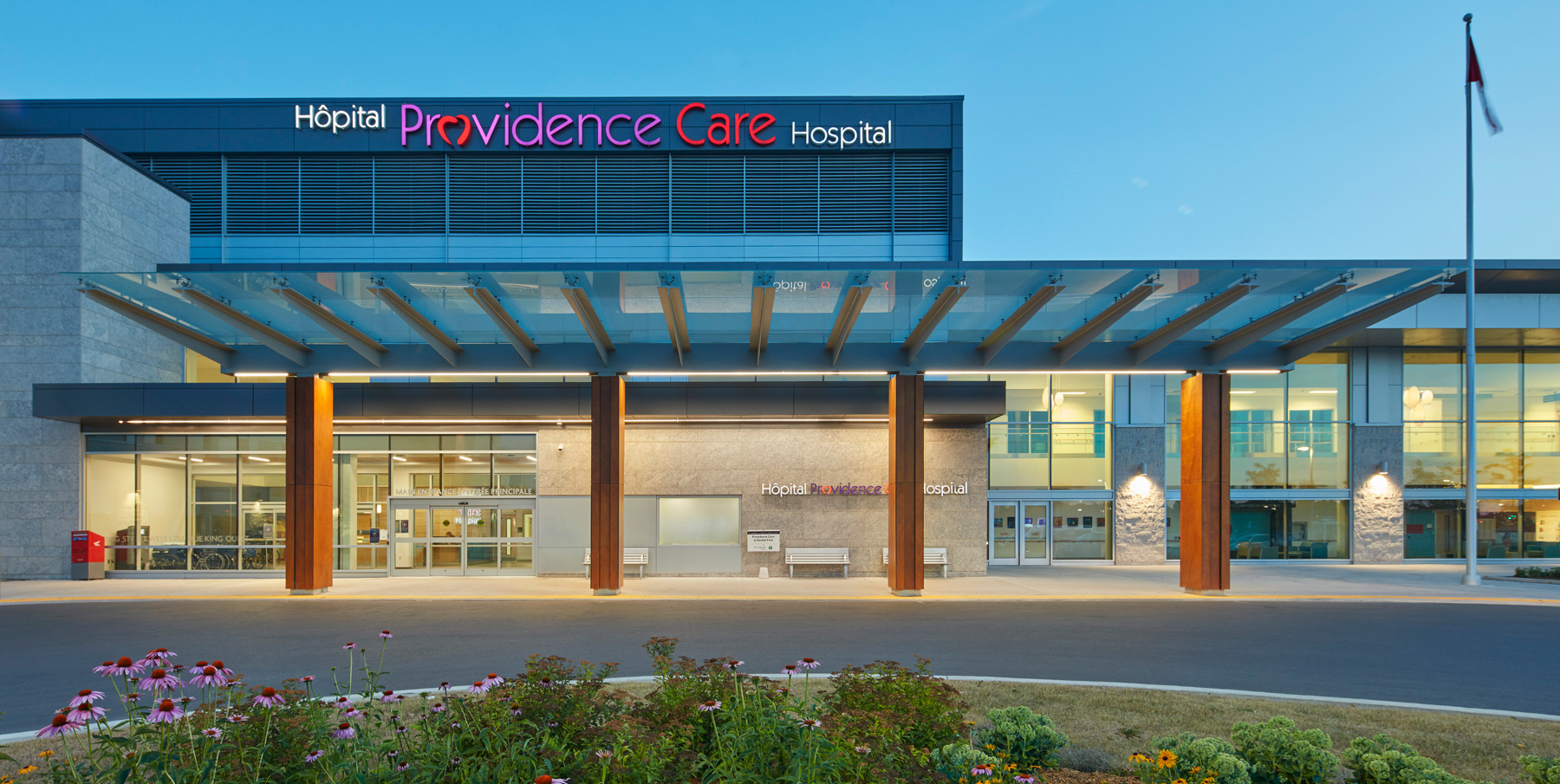
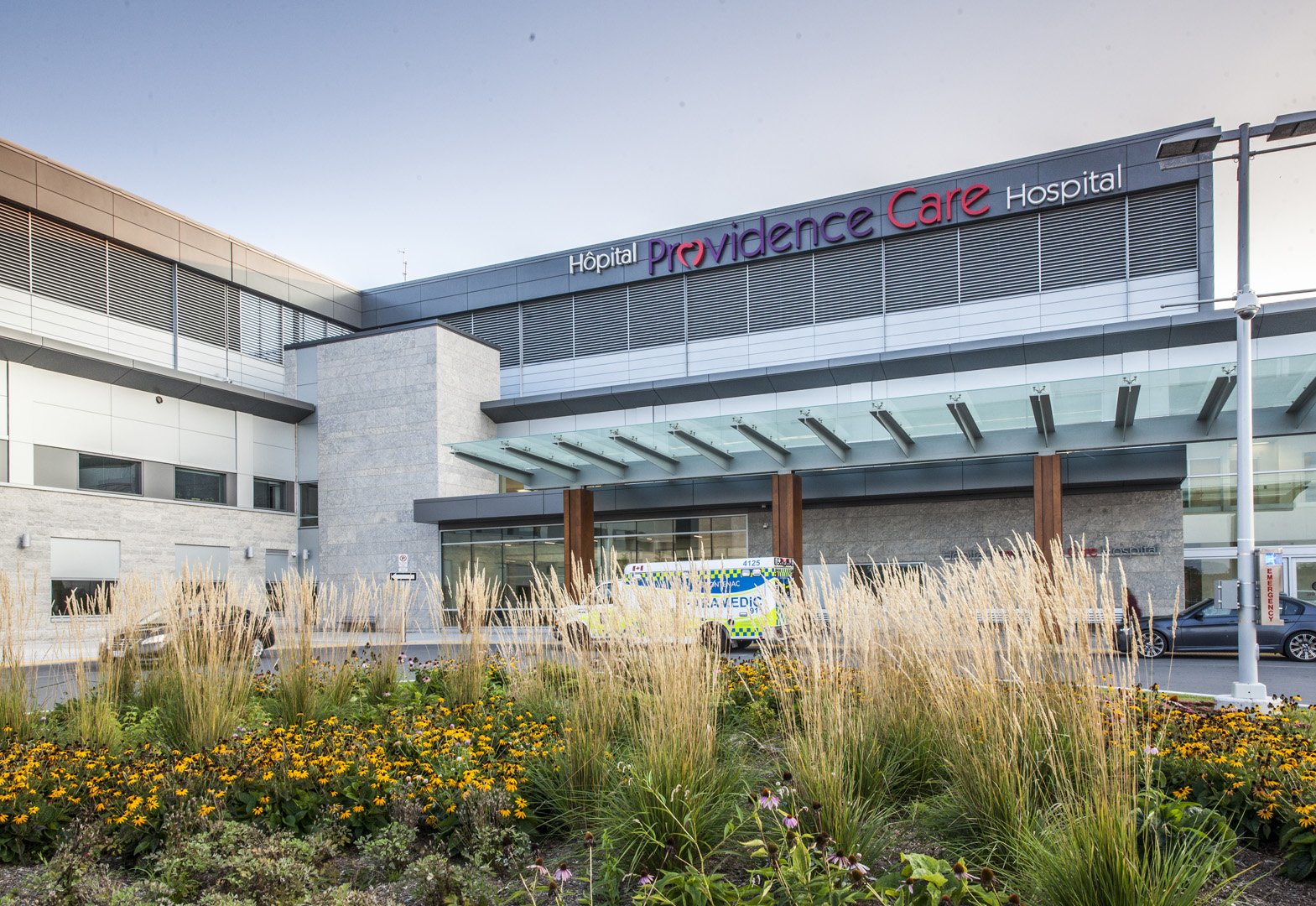
Providence Care Hospital is a subacute hospital that includes rehabilitation, geriatrics, complex medical, palliative care, and mental health. Within this hospital, there are 60 rehabilitation bed across 2 units. There are outpatient clinics, an EMG lab, and a full complement of allied health care professionals. This new state of the art health care facility is the site of all inpatient and outpatient rehabilitation services since April 2017. This new site has significantly enhanced the clinical, education, and research experiences of residents.
Kingston Health Sciences Centre, Hotel Dieu Hospital site, Kingston: medicine, surgery, neurology and pediatric ambulatory clinics.
Kingston Health Sciences Centre, Kingston General Hospital site: acute-care inpatient services.
University of Ottawa (Affiliation Agreements) for 1 block Pediatric Rehabilitation rotation at the Children’s Hospital of Eastern Ontario (CHEO) and 1 block of Prosthetics and Orthotics.
Affiliation agreements also exist with the University of Ottawa and the University of Toronto for Cardiac Rehabilitation.
There are options in multiple locations across Ontario for community rehabilitation rotations. Residents may choose to do electives outside of Ontario, depending on their career goals.
All residents are provided with a Queen’s email address, internet access, and dedicated office space with computers. On-site library facilities include a small departmental library containing print and medical resources and an excellent hospital library with knowledgeable staff. The Health Sciences Library on the Queen’s University campus has additional resources with knowledgeable librarians.
Ontario | |||
|---|---|---|---|
Effective October 4th, 2023 | |||
PGY1 | $73,367.35 | ||
PGY2 | $79,669.97 | ||
PGY3 | $85,564.01 | ||
PGY4 | $92,700.65 | ||
PGY5 | $98,566.96 | ||
PGY6 | $104,167.39 | ||
PGY7 | $109,250.12 | ||
PGY8 | $115,826.24 | ||
PGY9 | $120,082.47 | ||
Professional Leave | 7 working days/year Additional time off provided for writing any CND or US certification exam, leave includes the exam date and reasonable travel time to and from the exam site. Additional RCPSC & CFPC Certification Examination Prep Time
|
Annual Vacation | 4 weeks |
Meal Allowance | No |
Frequency of Calls | 1 in 4 In-hospital, 1 in 3 home |
Pregnancy Leave | 17 weeks |
Parental Leave | 35 weeks, 37 weeks if resident did not take pregnancy leave |
Supplemental Unemployment Benefit (SUB) Plan | Top-up to 84% 27 weeks for women who take pregnancy and parental leave; 12 weeks for parents on stand-alone parental leave. |
Provincial Health Insurance | Yes |
Extended Health Insurance | Yes |
Provincial Dues (% of salary) | 1.3% |
Dental Plan | 85% paid for eligible expenses |
CMPA Dues Paid | Under current arrangements, residents are rebated by Ministry of Health and Long Term Care for dues in excess of $300. |
Long-Term Disability Insurance | Yes – 70% of salary, non-taxable. |
Statutory and Floating Holidays | 2 weeks leave with full pay and benefits; 10 stat days plus 1 personal floater. Residents are entitled to at least 5 consecutive days off over the Christmas or New Year period, which accounts for 3 statutory holidays (Christmas Day, Boxing Day and New Years Day), and 2 weekend days. |
Life Insurance | Yes, 2x salary |
Salary and Benefit Continuance | A resident that can’t work due to illness or injury will have salary and benefits maintained for 6 months or until end of appointment (whichever occurs first) |
Call Stipend | Regular: $127.60 in-hospital; $63.80 home call or qualifying shift on shift-based services. Weekend premium: $140.36 in-hospital; $70.18 home call or qualifying shift on shift-based services. |
Updated January 6, 2025
Visit the PARO website.
www.myparo.ca

As a smaller centre, here you are your name, not a student number. We treat each other with respect and dignity, and work well together. We are here to help you grow into the Physiatrist you’ve dreamed of being!
Kingston has many advantages with regards to quality of life, cost of living, and ease of movement within the city.
Kingston is known for its many recreational opportunities including some of the best fresh water sailing in the world, wilderness parks, an active triathlon community, rowing, exceptional restaurants, and an active theatre and music scene, to name a few. For those with a family, it is an ideal environment to raise children with many excellent schools. It is only a short drive to Ottawa, Toronto, Montreal, and Syracuse. Past residents have found time to enjoy the richness of life outside of medicine that Kingston has to offer while completing their clinical training.
